Sunday, May 25, 2008

CR2.0: Just in Time Science Resources

While reading the new discussion items at Classroom2.0, I came across a request from a student, Mike P, in the Web 2.0 Class. Mike's request was to find
...good sites where [I] can find videos or even a good podcast for cellular biology?


Cellular Biology recommendations were first made by Michelle Eckstein, Shaun Fletcher and Britt Gow. Here is my response to the excellent request:

Good recommendations from all. I have used the Cells Alive website which is excellent, as are the others.

I would like to recommend a science education portal BioInteractive. Their motto is, "Teach Ahead of the Textbook", and BioInteractive is part of a worldwide effort by research scientists to help more people learn about science. Their focus at BioInteractive is providing material and information for science educators and their students.

Research labs and universities provide excellent virtual labs, still images, "Holdiay Lectures" on a science topic, videos, podcasts and so much more. I have used various BioInteractive materials with 6th - 12th grade students. Many of the materials could be used with younger students.

You can sign up for the HHMI Bulletin. The May Issue
would be very helpful to teachers. Also, you can receive their newsletter and get science research and news updates that can be used as current events for science or professional development information.

Saturday, April 5, 2008

Powered by Twitter Logo & Chicklet

ImJustCreative.com chicklet creator of this excellent "Powered by Twitter" chicklet has provided us with an excellent resource. Go to his websites and check out his other excellent work. His photography is vivid and interesting.

Tuesday, March 18, 2008

Drugs: Expired and Leftover - Unintended Consequences

What do we do with our unused or out-of-date, expired medicines? Or, more importantly, what should we do with these drugs?

Recently, one of the cable networks, CNN, aired the Associated Press report that most water supplies are contaminated with leftover prescription drugs, SO I am revisiting my post on the subject that I first wrote on August 16, 2007. This topic came to light, over the past few years, as I tried to find official ways to discard pharmaceuticals, of all sorts. These drugs are biohazards, but it took total water contamination to even bring this problem to light.

How many drugs will we be unintentionally taking, before this problem is resolved? How damaged will our children be, before we act? How many people are dying, of unknown causes, that really are related to unintentional, yet dangerous drug interactions?

So, welcome to my world on surfing the trends of my American Life, circa August 16, 2007.

This has been a concern of mine for several years. In good conscience, a person can't throw leftover or out-of-date medicines in the trash or down the drain.

These medicines should be disposed of in a way that doesn't endanger us further by poisoning or changing our water supply.
I read a concise explanation of a related issue,
"Why do medicines expire after a certain period of time?"
For instance, antibiotics in the water system can affect the growth and development of a wide variety of living organisms, from bacteria to humans. Can you imagine what kinds of super bug is developing in antibiotic laced waters? How are hormones from birth control pills, prednisone, and other similar medicines altering the growth, development and reproduction of living organisms, including humans and the animals they depend on for food?


Some might say, "Well, there are probably very few pills actually getting into our waterways and other ecosystems. You are probably exaggerating the extent of the impact of these waste medicines." I don't know, maybe I am not reacting strongly enough to a catastrophe. I can always develop a simple hypothesis, and we can work our way through some mental practices to discover whether there may be legitimate concerns about our ecosystem.

Once discovered, we can proceed with specific research to find a more specific answer to the question, Is our ecosystem contaminated with leftover medicines at a level that may interfere with normal growth and development of living things within the ecosystem?

Let's do a simple little simulation with one type of medicine to find out.


Let's say that each year, a minimal number of people, 1 in every 10, do not take all the antibiotics prescribed to them and do not give them to another person. This small number of people, 10%, dispose of these antibiotics into the water system.

Then, let's say that a minimal number of pills, say 3(three) 500 mg tablets are put into the water system. What would be the scope of the problem in our various river systems?

How many pills would that be? How many milligrams of antibiotic would that be?


Let's say that we are talking about a very small river system, consisting of 20 small to medium sized towns.

Let's say that the small towns average 3,000 people and the medium sized towns average 15,000 people. We can't realistically count the rural folks who use the water systems, so we won't.


Let's say, that in a small river system, 40% of the towns(8) are medium sized and 60% of the towns(12) are small. That would give us a population estimate for the small river system of 156,000 people. If 10% of this population disposed of their antibiotics within the town's sewer systems, that would mean 15,600 people discarding their antibiotics in the sewer.

Using our 10% figure of those who put at least 1500mg(3 times 500mg) of antibiotics in our small river system, we could estimate that (15,600 times 1500) 23,400,000 mg (milligrams) of antibiotics would course through this small river system.

Let's put the milligrams of antibiotic into our American perspective of measurement. Per year, that is 46,800 antibiotic pills, of varying strength, flowing into only ONE small river system.


Amazing isn't it?


If you let these thought experiments progress, we would consider other types of medicines and drugs.
What about hormones?
What about antidepressants or allergy medicines?


Yes, I know that this is a pretty simplistic scenario with no idea about many pertinent variables, like where the antibiotics would enter the water system, how fast the water was moving, and how well antibiotics were filtered from a town's drinking water, BUT I believe that the idea that there are unintended consequences for "throwing away" medicine is evident from these simple extrapolations.
There are solutions, but only communities of like minded people can develop them.


Do we value the lives of our children? Can you answer yes to this important community question? Our children are the ones who will be more affected by the drug contamination in our water than will the adults. Their developing bodies are more reactive to environmental variables.


There are similar ecological disasters that we can look to for a warning. We all know about the direct link between factors like: poor air quality and poor feral animal control with increased rates of asthma.

All these ecological problems are an ongoing concern everywhere, but they are always more greatly magnified in places of greater population density.


There are some safe methods for disposing of medicines. Most of these methods basically involve treating medicine for what it is, a hazardous waste product.


Just some ideas to think about, and a call to action for those who can care about the living.

Friday, March 7, 2008

Tree of Life Redo

This is a summary of a research article from Nature. Science teachers and interested hobbyists will be intrigued to learn how the data base was created and new implications about various changes in animal relationships since it takes new research into account.
clipped from www.livescience.com
A list of biologists long enough to choke a horse has completed a new tree of life for animals, resolving the relationships among all the major groups and suggesting some weird things about the origins of animals with well-developed tissues.
This was the surprise tissue finding — comb jellyfish (jellies with well-developed tissues) diverged from other animals even before the lowly sponge, which has no tissue to speak of.
Either comb jellies evolved their complexity independently from other animals or sponges became greatly simplified through the course of evolution
If corroborated, “this would significantly change the way we think about the earliest multicellular animals,” Dunn said. The results are detailed in the March 6 issue of the journal Nature.
These gigantic trees of life (this one is said to be the most comprehensive animal tree of life to date) require massive computer power to run algorithms and resolve huge matrices of data
more than 120 processors
in labs around the globe
 blog it

Tuesday, March 4, 2008

Discovering Cool Pics & Podcasts

Sometimes you just want to see what the scientists are seeing. It seems to make their research come alive. People seem to be very curious about new ideas, discoveries and happenings in science.

What are they doing?
What are they seeing?
What are they discovering?
What are they planning in the future?

These questions and more can be answered if you sign up to receive updates from NSF, the National Science Foundation. Parents, teachers, and those who love science will all love this website. There are explanations in simple terms, and there are also the scientific research reports that delve into the science minutia of the research.

This podcast webpage is part of the National Science Foundation website where you can listen to science podcasts. There are also thousands of really fantastic images sent in from researchers all around Earth.

You can also download an rss feed.
clipped from www.nsf.gov
"Eye Screen" -- The Discovery Files
The Discovery Files
Audio Play Audio
The Discovery Files podcast is available through iTunes or you can add the RSS feed to your podcast receiver.

University of Washington engineers have for the first time, combined a flexible, biologically safe contact lens with an imprinted electronic circuit and lights.

Credit: NSF/Clear Channel Communications/Karson Productions
Audio Transcript:

I'm Bob Karson with the Discovery Files -- new advances in science and engineering from the National Science Foundation.

If the eyes are windows to the soul, the contact lens may become the TV screen.

Using a complex microfabrication technique, University of Washington researchers have come up with a way to imprint tiny circuit boards and LEDs directly on a flexible contact lens.

"The Discovery Files" covers projects funded by the government's National Science Foundation. Federally sponsored research -- brought to you, by you! Learn more at nsf.gov or on our podcast.

 blog it

Thursday, February 28, 2008

Interactive Science Experiences: Solar Weather 2008


Now is the time! This is the moment! You the teacher have waited since all these new online applications made email one dimensional, and NOW you can use them easily in a protected environment.

You can learn to use these new tools of technology in your classroom and in your life. I believe that using these Web2.0 tools can improve your productivity, as well as student achievement.

With a bit of effort, you can break into the Web2.0 world, and NASA has the tools to help. There are an enormous number of projects, activities and materials available to teachers, for science, math and technology, yet also for social studies, languages and other areas of education.

All you have to do is find the topic you are studying, and NASA can point you to the websites and online interactive practices to grab and hold students' attention. Then the rest is up to you, do one activity, one project or an array of related interactions and lessons. Don't forget to make an official connection with the NASA group, so you can always email or talk with someone who can help or answer questions.

If you talk with any science teacher, connecting with NASA, they will tell you their favorite NASA area. You could spend an entire teaching career using a variety of NASA connections and never know that other stuff is out there. For myself, one of my favorite NASA groups is the SECEF, Sun-Earth Connection Education Forum.

Each year, the ingenious educators, technicians and scientists, at the Sun-Earth Connection Education Forum, provide Science Math & Technology teachers with new, more creative, yet mind enhancing multimedia, projects and opportunities for students, teachers, scientists and the public to develop their knowledge of Sol and Earth.

Many of these new opportunities are considered interactive, part of the new Web2.0 movement.

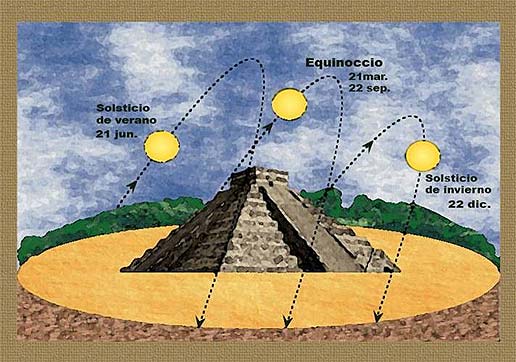
One of the most exciting, yet practical Sun-Earth celebrations of the SECEF, Ancient Observatories, continued the NASA educational traditions while paving the trail into the online, interactive path for science education.

With podcasts, email alerts, related summer institutes, online projects, partnerships and public activities, the SECEF team really pulled the Sun-Earth Day problem based learning project into an international learning celebration. Each year since, they have continued this powerful methodology of linking students, teachers, scientists and the public around the world into a model classroom.

If you ready to begin an educational partnership with the SECEF, the Sun-Earth Connection Education Forum, start by registering at the Sun-Earth Day 2008 websited or by emailing Elaine Lewis, lewis@mail630.gsfc.nasa.gov and to receive the 2008 Sun-Earth Day Packet and email updates.

One Web 2.0 Sun-Earth Connection Education Forum (SECEF) activities you missed, but can use asynchronously, is the Arctic Circle Sunrise 2008. This series of meetings and interviews was part of the Polar Gateway Conference that ran during the last week in January. There are excellent interviews and historical perspectives from some of the scientists and assistants from the local Inuit communities. Their stories are marvelous, and I think children and young people would agree. Other information and images are also available from this conference.

Friday, February 22, 2008

It's del.icio.us

Ooh! I love George Carlin, and so does one of my newest del.icio.us fans. That is what I like about del.icio.us, it is TRULY a social networking system.

Del.icio.us may not be a synchronous social networking system, but it is a viable networking system among people with shared, common interests. These people can introduce you to a bookmark or a contact. If this new contact agrees that your common interests are shared, the person will connect with your network, as a mutual connection....not just a fan.

Today, I was checking my fan list. I usually travel to the fan's bookmarks to see why they are a fan. What social aspect of del.icio.us drew them to my bookmarks?

Was it a bookmark? What was the bookmark(s) that drew them to my network. I like to investigate that social aspect of the discovery of a new fan.

I also check the new fan's network. Sometimes, it was a shared contact that drew them to check out my bookmarks. See how social del.icio.us is?

Two very social ways to connect to another bookmarker:
(1)shared contacts AND/OR
(2)shared interests.
Isn't that how friending begins?