Friday, April 17, 2009

Designs on DaVinci


Doing DaVinci, a new interactive website with a companion weekly show, contains historical and scientific information about Leonardo DaVinci, as well as games and surveys. There are also video clips and information and interviews about the expert builders who brought DaVinci's machines to life, from his notes and diagrams.

One of the more interesting web applications on this site is Leonardo DaVinci's Personality Quiz. Several colleagues in our PLN, professional learning network, tried it out. We found it enlightening, as well as entertaining. This quiz would definitely capture the interest of students and teachers. It could be used as a lesson starter, sometimes called the anticipatory set.

This website contains timelines, samples of DaVinci's machines and a host of other applications that could be used by teachers of any subject.

The draw to DaVinci, as the ultimate Renaissance Man, remain his great and varied interests. Try out the website, quizzes, model-building and dramatizations. The companion television show will air each Monday throughout the month of April.


Image Credits:

Wikimedia.org
DaVinci Notes of Geometry of Flower
The Babe in the Womb

Thursday, December 11, 2008

Earth System Science: What is it?

Since World War II, the explosion in scientific knowledge naturally led many scientists and educators, to specialize in one discipline or another. Even within a scientific discipline, such as ecology, now called environmental studies, there were many specializations. Some include water ecology, habitat studies, population studies, etc. After a half century, the over-emphasis on specialization became so pronounced, that many believed that integration among various scientific disciplines must be established anew.

This integration is most pronounced in the scientific disciplines representing any part of studies of the Earth, namely Geology, hydrology, meteorology, biology and others. A new integrated Earth Science discipline, referred to as Earth System Science, was created. The push for this integration with Earth Science was promoted most actively by the National Science Foundation (NSF) and the National Aeronautic and Space Administration (NASA).

In most scientific and education quarters, it is now recognized that people can understand how the Earth works and how we interact with the Earth, if we teach the subject in a more project based manner. Earth Science teachers are encouraged to include all the systems of the Earth in their classes. If Earth Science teachers have a greater understanding of the various spheres of the living and nonliving parts of the Earth as a system, they can effectively explain and teach Earth System Science.

To encourage you to have a basic understanding of the Earth System Science as a scientific discipline, I have included an Earth System Science WebSlide.

Monday, November 17, 2008

Diigo a WORDLE!


Interested in learning more or sharing your WORDLES? Now, you can access the Diigo WORDLE Group.

If you haven't yet used Diigo, the social bookmarking site, now would be a great time to join. While you're at it, consider joining the Diigo for Educators site that is protected, so you can use it with your students.

Here is a slide show of many of our group's bookmarks, to date.

Thursday, November 13, 2008

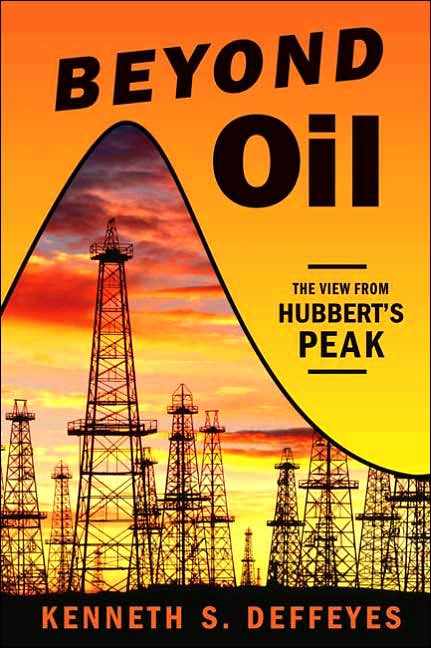
Peak Oil: View from Hubbert's Peak


Peak Oil is a common concern and a scientific theory that would be an excellent topic for science teachers from middle school and up to discuss or teach about in the science class. It is especially fitting to use in Earth Science, Environmental Studies, or History of Science areas.


I created a WORDLE from the preface text of Kenneth S. Deffeyes 2005 book, Beyond Oil: A View from Hubbert's Peak.

Wednesday, October 15, 2008

Science Heroes to End Poverty


Photo by fotodesign-luetke
Attribution License
Robert Rodale, the son of J.I. Rodale, founder of Rodale Institute, looked poverty right in the eye and decided that returning to traditional agricultural practices of the various areas around the world could end poverty and protect people from families.

To learn more about his practical views based on sound science, read Save Three Lives. Rodale lays out the statistics of the costs and range of deaths from famine. He specifically discusses the uselessness of food relief as a solution and proposes traditional farming practices that can stabilize the land and produce farm products meant to be used in a local environment...instead of importing farm crops from the industrialized temperate farming communities.

From Publisher's Weekly review of Robert Rodale's book, Save Three Lives, we learn the practical message of the author after year's of research in more tropical or dry regions of the world.
Prior to his death in 1990, publisher Rodale had worked through the Rodale Institute to improve agriculture in Third World countries, particularly Africa. Temperate-zone farming practices have been disastrous in the tropics, he writes, and famine relief is not the answer; he notes that 90% of all people who die from hunger do so outside of famine areas. Rodale proposes a return to traditional agriculture with special efforts to rebuild the land. He advocates alley cropping, in which food crops are planted between rows of fast-growing leguminous trees. The trees are cut back for firewood, while branches and leaves are used for mulch, fertilizer or livestock feed. Mixed crops, local species and nutritious plants such as amaranth and winged bean offer promising answers to hunger and famine. Rodale discusses water-harvesting, fish farms and salt-water tolerance in plants. Urging the reader to act to support sustainable agriculture and help prevent famine, Rodale offers a workable solution.


From the Library Journal, we can read a bit more of his ideas about returning these third world areas to more sustainable, traditional farming practices:
Rodale advocates an action strategy involving a return to sustainable indigenous farming systems, alley cropping with leguminous trees to save the dwindling wood supply, biological pest control, sensible use of available water, control of populations, and eliminating exploitation of women, who do most of the agricultural work. His clear descriptions of the problem and practical solutions should motivate all readers to action. Highly recommended.-- Irwin Weintraub, Rutgers Univ. Libs., Piscataway, N.J.


Learn more about this American Science Hero and his righteous indignation about why poverty still exists in our modern world and the Rodale Institute that pursues his vision of a world where famine, exploitation and poverty are eliminated.

Thursday, June 12, 2008

BEWARE the Tomato

This is the primary source for reporting all the cases of Salmonella saintpaul infections beginning in April of 2008. There are maps, earlier reports and tips for consumers.
clipped from www.cdc.gov

Investigation of Outbreak of Infections Caused by Salmonella Saintpaul

Click Here for Advice to Consumers

CDC is collaborating with public health officials in many states, the Indian Health Service, and the U.S. Food and Drug Administration (FDA) to investigate an ongoing multi-state outbreak of human Salmonella serotype Saintpaul infections. An epidemiologic investigation conducted by the New Mexico and Texas Departments of Health and the Indian Health Service using interviews comparing foods eaten by ill and well persons has identified consumption of raw tomatoes as the likely source of the illnesses in those states. The specific type and source of tomatoes is under investigation; however, the data suggest that large tomatoes, including Roma and round red, are the source.

Since mid-April, 167 persons infected with Salmonella Saintpaul with the same genetic fingerprint have been identified in 17 states:
it is likely many more illnesses have occurred than those reported
not on today’s map
 blog it

Sunday, May 25, 2008

CR2.0: Just in Time Science Resources

While reading the new discussion items at Classroom2.0, I came across a request from a student, Mike P, in the Web 2.0 Class. Mike's request was to find
...good sites where [I] can find videos or even a good podcast for cellular biology?


Cellular Biology recommendations were first made by Michelle Eckstein, Shaun Fletcher and Britt Gow. Here is my response to the excellent request:

Good recommendations from all. I have used the Cells Alive website which is excellent, as are the others.

I would like to recommend a science education portal BioInteractive. Their motto is, "Teach Ahead of the Textbook", and BioInteractive is part of a worldwide effort by research scientists to help more people learn about science. Their focus at BioInteractive is providing material and information for science educators and their students.

Research labs and universities provide excellent virtual labs, still images, "Holdiay Lectures" on a science topic, videos, podcasts and so much more. I have used various BioInteractive materials with 6th - 12th grade students. Many of the materials could be used with younger students.

You can sign up for the HHMI Bulletin. The May Issue
would be very helpful to teachers. Also, you can receive their newsletter and get science research and news updates that can be used as current events for science or professional development information.